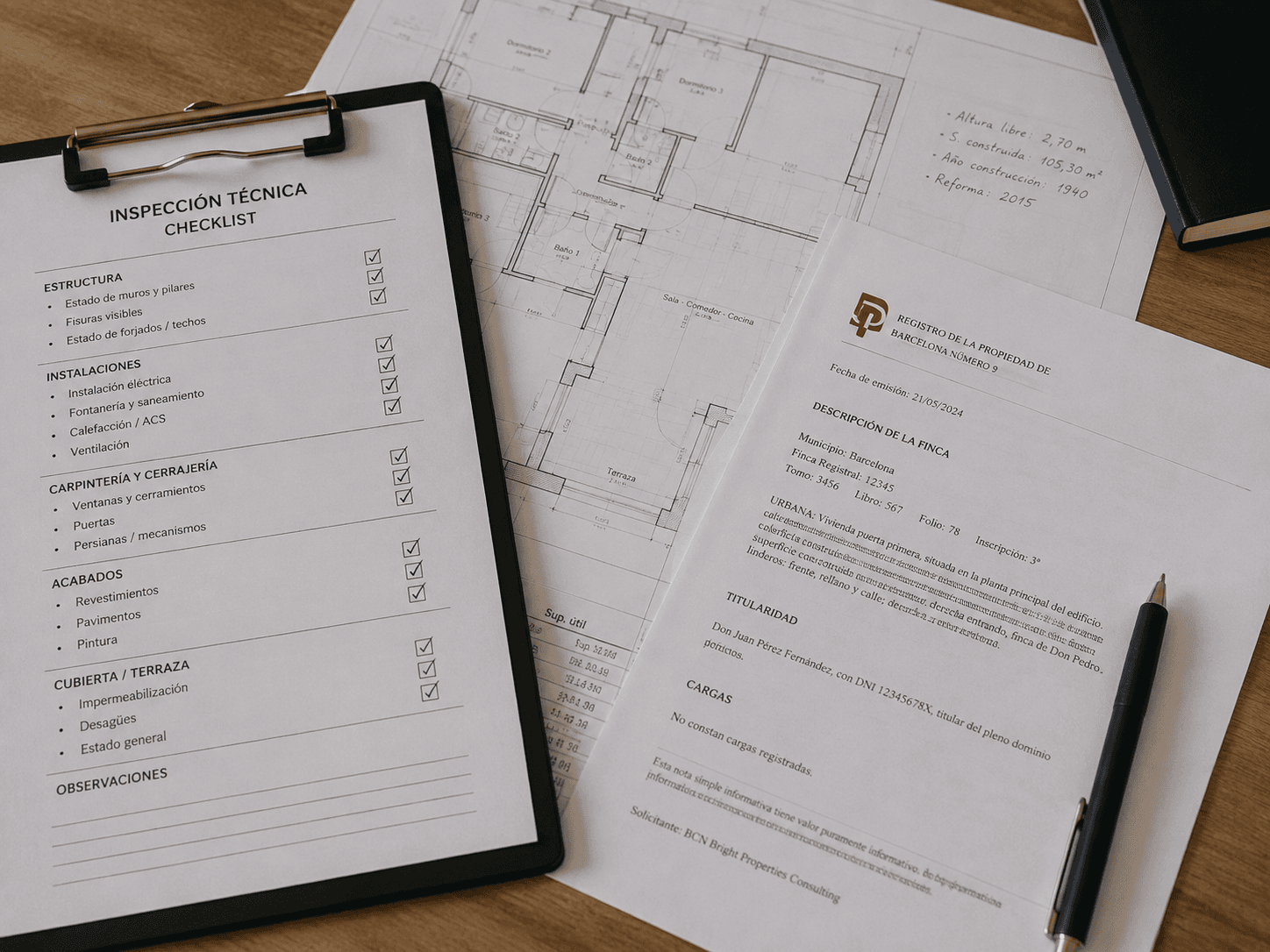
Documentation
Start with what the documents say about the property, and whether it matches reality.
- Registry extract (nota simple): owner, charges, mortgages or encumbrances
- Cadastral certificate: surface, use and graphic description
- Consistency of surfaces and layout between registry, cadastre and the property itself
- Community certificate: debts and approved or pending works
- Property tax (IBI) and utilities up to date
- Energy performance certificate and, in Catalonia, the habitability certificate where required
Physical condition
A technical visit looks for what a normal viewing does not show.
- Visible structural signs, such as cracks or deformations
- Damp, leaks and their possible origin
- Roof, facade, balconies and terraces
- Electrical, plumbing and heating installations, and what may need replacing soon
- Windows, insulation and comfort
The building, not only the flat
You buy a share of a building. Its condition and its community finances affect you directly.
- Periodic technical inspection of the building (ITE), where it applies by age
- State of common areas, roof and structure
- Pending works or special assessments (derramas) that you may have to pay
- Community rules and obligations
Urban and licence status
Extensions, terraces that were closed in, changes of use or distribution that were never declared can create problems at sale time or when you apply for a mortgage. The review should compare what exists with what is recorded and permitted.
Renovation potential and hidden costs
If you plan works, check before buying what the property and the building allow, and what it is likely to cost. Structural limits, community approval, protected elements and licence requirements all change the budget and the schedule.
Red flags worth a second look
- Surface in the listing that differs from the registry or cadastre
- Recent cosmetic work that could hide damp or damage
- Charges or debts registered against the property
- A building with no recent technical inspection and visible decay
- Seller reluctance to share documents
When to do it
Ideally before signing the earnest money contract, or with conditions in it that depend on the result. Finding problems before you are committed gives you three options: walk away, renegotiate, or continue with a realistic budget.
This guide is general information, not legal, tax or financial advice. Rules and figures change, so always confirm the details of your case with a qualified lawyer or gestor.